The Ultimate Guide to Everest Base Camp Trekking
About this Journey
Dreaming of standing on top of the world at Mount Everest (8,848m)? While reaching the summit is a challenge only a few can achieve, there’s still an incredible way to experience the Himalayas up close.
The Everest Base Camp trek offers an achievable adventure for anyone with good fitness and determination. You don’t need to be a professional climber to witness the beauty of the world’s highest peak.
For the most breathtaking views, hike up to Kala Patthar—widely known as the best spot to see Everest in all its glory, without the risks of climbing to the top.
If you’re looking for a once-in-a-lifetime Himalayan journey, the Everest Base Camp trek is the perfect choice.
14-Day Everest Base Camp Trek Itinerary
Day 1: Arrival in Kathmandu
Arrival at Tribhuvan International Airport and transfer to your hotel in Kathmandu. Rest, recover from your journey, and prepare for the trek ahead.
Day 2: Fly to Lukla, Trek to Phakding (3–4 hours)
Your adventure begins with a scenic flight from Kathmandu to Lukla. After landing, you start a gentle trek through small villages and along the river to Phakding. It’s an easy first day to get used to the trail.
Day 3: Trek to Namche Bazaar (5–6 hours)
You walk through forests, cross suspension bridges, and enter Sagarmatha National Park. The final climb to Namche Bazaar is challenging, but you’ll be rewarded with your first mountain views.
Day 4: Acclimatization in Namche (2–4 hours)
To adjust to the altitude, you stay another day in Namche. A short hike offers your first glimpse of Mount Everest, while helping your body adapt.
Day 5: Trek to Tengboche (5–6 hours)
The trail offers beautiful Himalayan views before leading you to Tengboche Monastery, the spiritual center of the region.
Day 6: Trek to Dingboche (5–6 hours)
You leave the forests behind and enter more open landscapes. The air gets thinner as you gain altitude, and the scenery becomes more dramatic.
Day 7: Acclimatization in Dingboche (3–4 hours)
Another rest day helps your body adjust. You can take a short hike to higher ground for better acclimatization and stunning views.
Day 8: Dingboche to Lobuche (5–6 hours)
The trail gradually climbs past memorials dedicated to climbers. The environment feels more rugged and high-altitude.
Day 9: Lobuche to Everest Base Camp (7–8 hours)
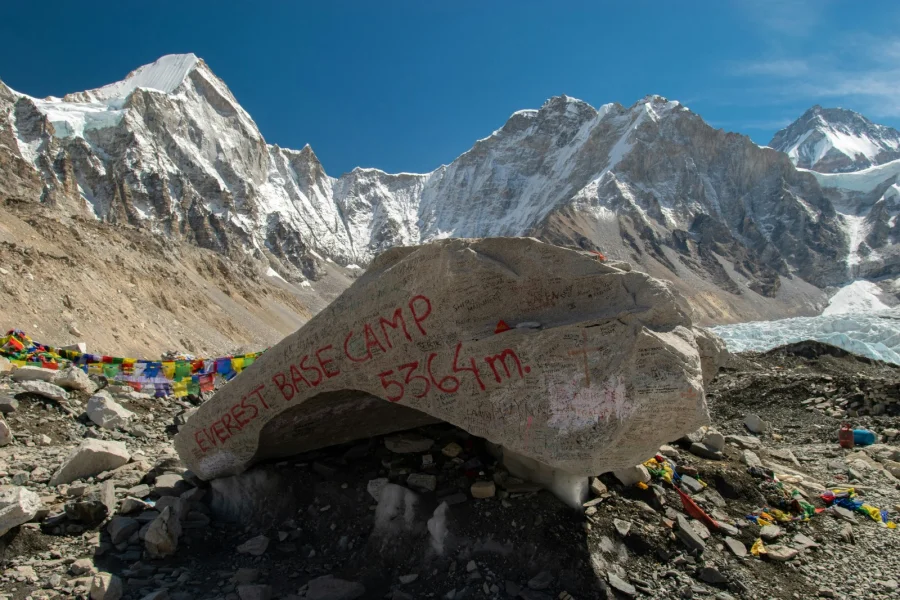
This is the big day! You trek to Everest Base Camp, standing at the foot of the world’s highest mountain. After celebrating, you return to Gorak Shep for the night.
Day 10: Kala Patthar & Descend (6–7 hours)
Early in the morning, you hike up to Kala Patthar for the best sunrise view of Everest. Then you descend to a lower village, where breathing becomes easier.
Day 11: Trek to Namche Bazaar (6–7 hours)
You continue descending through familiar trails, making the journey easier and more comfortable.
Day 12: Trek to Lukla (6–7 hours)
Your final trekking day brings you back to Lukla, marking the end of your trekking adventure.
Day 13: Fly to Kathmandu
You take a morning flight back to Kathmandu and enjoy a well-deserved rest.
Day 14: Departure
Your Everest Base Camp adventure comes to an end, leaving you with unforgettable memories.
Accommodations & Facilities on the Everest Base Camp Trek
Accommodation on the Everest Base Camp trek is basic but comfortable, giving you a true Himalayan experience. Instead of hotels, you’ll stay in traditional teahouses run by local Sherpa families.
Lower zone (Lukla to Namche Bazaar)
This is the most comfortable part of the trek.
Better teahouses with private or shared rooms
Hot showers are easily available
Wi-Fi and mobile network work better
More food choices on the menu
Slightly more modern facilities
Mid zone (Tengboche to Dingboche)
Here, things start becoming more basic as you gain altitude.
Simple teahouses with twin-sharing rooms
Limited hot showers (extra cost)
Slower Wi-Fi and weaker network
Fewer food choices but still good meals available
Colder nights and thinner air
High zone (Lobuche to Everest Base Camp)
This is the highest and most remote part of the trek.
Very basic teahouses
Basic rooms with shared toilets
No reliable Wi-Fi or network
Limited food options (mostly simple meals)
Very cold temperatures
Everest Base Camp Trek Permits & Costs
Trekking to Everest Base Camp requires two main permits. These are easy to get and are usually arranged by trekking agencies, but you can also buy them yourself in Kathmandu or on the trail.
1. Sagarmatha National Park Entry Permit
This permit allows you to enter the protected Everest region (a UNESCO World Heritage Site).
Cost for foreigners: NPR 3,000 (around $20–$25)
Required for all trekkers entering the national park
Can be issued in Kathmandu or at Monjo checkpoint
2. Khumbu Pasang Lhamu Rural Municipality Permit
This is the local entry permit for the Everest region.
Cost: NPR 3,000 (around $20–$25)
Issued in Lukla or Monjo
Mandatory for all trekkers in the Khumbu area
TIMS Card (Not Required)
The TIMS card is no longer required for the Everest Base Camp trek
Total Permit Cost (Foreigners)
Total: around $40–$50 per person
Only two permits needed in total
Everest Base Camp Trek Cost
The total cost of the Everest Base Camp Trek depends on your travel style, comfort level, and whether you go independently or with a guided package.
Budget Trek Cost: $1,000 – $1,400
A low-cost option for experienced trekkers.
Basic teahouse accommodation
Simple local meals
Self-guided or minimal support
Standard flights (Kathmandu ↔ Lukla)
Standard Trek Cost: $1,400 – $2,200
Most popular choice for trekkers.
Licensed guide + porter
Permits included
Teahouse accommodation & meals
Airport transfers & domestic flights
Luxury Trek Cost: $2,500 – $5,000+
For a more comfortable experience.
Private guide and porter
Better lodges where available
Helicopter return option (in some packages)
Premium services and support
Transport Costs
Kathmandu → Lukla (flight): $180–$220 one way
Lukla → Kathmandu (flight): $180–$220 one way
Helicopter (optional): $400–$1,000 per person (shared)
Private helicopter: $2,500–$5,000+ (group cost)
Road + flight option (budget route): $10–$30 (bus/jeep to Salleri/Phaplu + extra trekking days)
Everest Base Camp Trek FAQs
1. How long does the Everest Base Camp trek take?
The trek usually takes 12 to 14 days, including acclimatization and return. This allows your body to adjust safely to high altitude.
2. How difficult is the Everest Base Camp trek?
It is a moderate to challenging trek. No climbing skills are needed, but you must be able to walk 5–7 hours daily at high altitude.
3. What is the highest point of the trek?
The highest point is Kala Patthar at 5,545 meters, which offers the best panoramic view of Mount Everest.
4. What is the best time to do the trek?
The best seasons are:
Spring (March–May)
Autumn (September–November)
These months offer clear skies and stable weather.
5. Is altitude sickness common?
Yes, it is common above 3,000m. Proper acclimatization, hydration, and slow ascent are very important to stay safe.
6. Do I get internet and phone signal on the trek?
Yes, but it is limited. Wi-Fi is available in many teahouses (paid), and mobile signal works in some areas but becomes weak at higher altitudes.